Union Ladina Agordin Sotciusa
A basin dominated by imposing massifs such as the Moiazza and the Agner, once tied to mining and now home to the multinational Luxottica; with its Venetian-style mansions alongside Ladin haylofts, it is the administrative and cultural heart of the Agordino.
History
Union de i Ladin de Agort
The Union de i Ladin de Agort was founded in 1997 on the initiative of Matteo Cassol Benvegnù and Fiorella Guadagnini, with the support of Gian Pietro Zanin and the advice of Professor Antonio Favretti in drafting the Statute. The founders’ aim was to promote the traditions of the Agordino and to protect and safeguard the speech of the Agordino, which belongs to the group of Ladin-Venetian varieties. Those were the years of a lively debate on the protection of linguistic minorities, a protection guaranteed by Regional Law no. 73 of 1994 and later by national Law no. 482 of 1999. Of fundamental importance in those years were the participation in organisational meetings with the provincial promoters of the protection movement and, above all, the declaration by the Municipal Administration of Agordo that the Agordino territory and its population belong to the area of Ladin-Venetian speech.
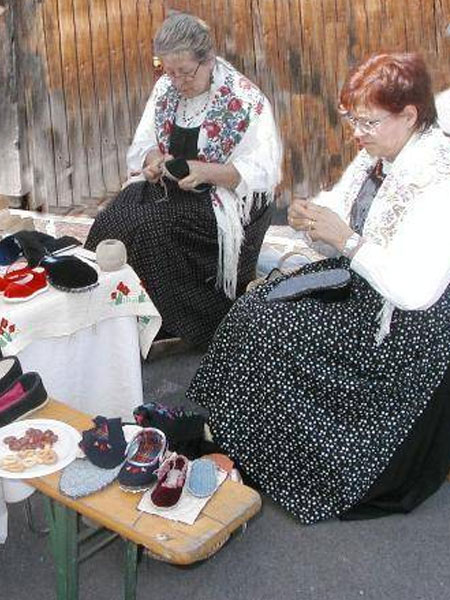
In 2007 the Statute was renewed and the Association was reinvigorated by new members interested in linguistic protection and in safeguarding our traditions. Its activities have taken two directions. The first is the promotion of the old crafts and of other aspects of local traditions, carried out by Matteo Cassol Benvegnù and above all by Antonia D’Isep Bortot. In this field, courses have been organised on making the traditional “scarpet”, introductory courses in weaving and spinning techniques, also aimed at young people, and courses promoting traditional local cooking. Some of these activities led to the Union taking part in the publication of books on the subject (edited by other authors); they have been promoted and made known through the constant and regular presence of member Antonia D’Isep Bortot at events and festivals in the area, and they are still carried on steadily today.
The second field to which the Union has devoted itself is the preservation and promotion of the local Ladin-Venetian speech. Matteo Cassol Benvegnù, Fiorella Guadagnini and Davide Conedera have worked on collecting, through interviews with elderly people, numerous examples of the Ladin-Venetian speech of the Agordino, accompanied by interesting and valuable accounts of material culture and of ways of life in the past. All these activities have resulted in several publications, intended as a record and for dissemination.
Since 2023 the Union de i Ladin de Agort has been incorporated into the Union Ladina Agordin Sotciusa, created specifically to bring together the aims, energies and collaborators of all the villages of the Conca Agordina, the area in which this Union operates.
Union dei Ladin de Oltach

The Union dei Ladin del Comun de Oltach was founded in 1997, in the wake of the Regional Law of 1994 (and of the subsequent law of 1999) which at last officially recognised 37 municipalities of the province of Belluno – among them Oltach (Voltago Agordino) – as speaking the Ladin language.
Since then the Union has worked on, proposed, organised and created activities to encourage, promote and increase awareness of this language, commonly spoken every day by the people of Voltago.
Among the activities carried out by the Union, we may mention, just as examples:
– Printing of various publications (calendars, the books “Na olta Oltach” and “Balagordin”);
– Creation of themed trails (“Troi de le berte”, “Giro de le zime”);
– Creation of permanent installations (“Talvà dei Ladin”, “Leroi de Vita”, the “Na olta Oltach” mural, “Welcome noticeboards in the village”);
– Road signs showing place names.
Since 2023 the Union dei Ladin del Comun de Oltach has also been incorporated into the Union Ladina Agordin Sotciusa.
Gruppo Folk del Pói
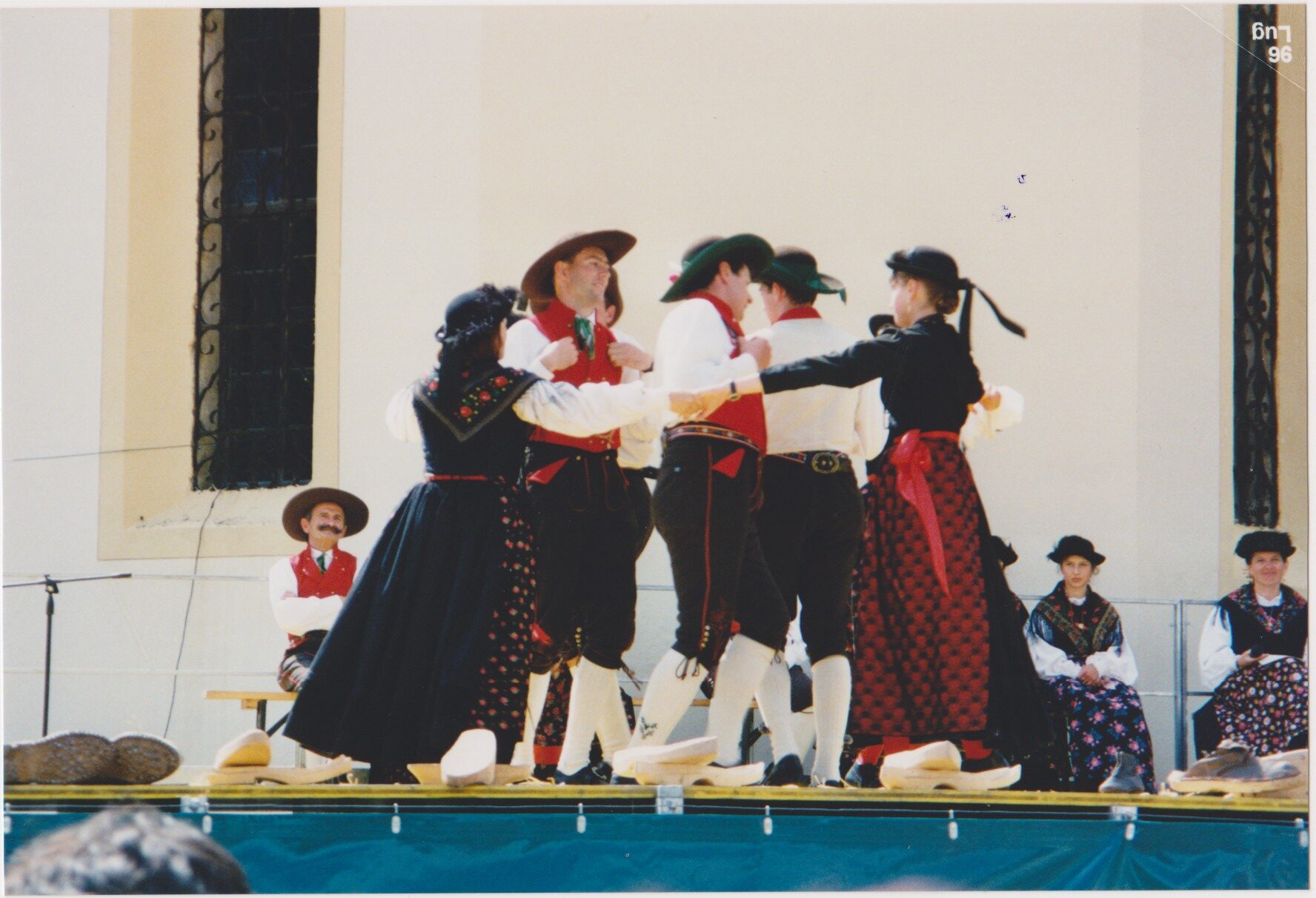
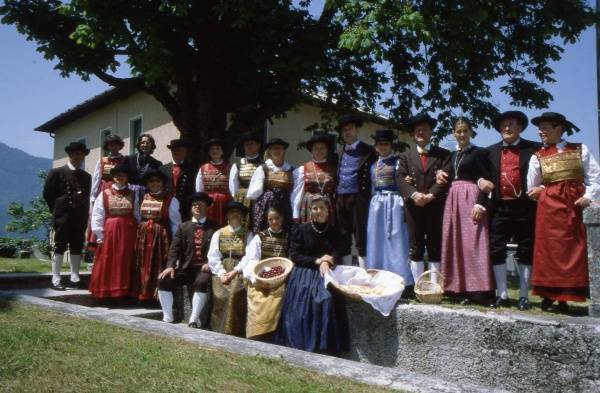
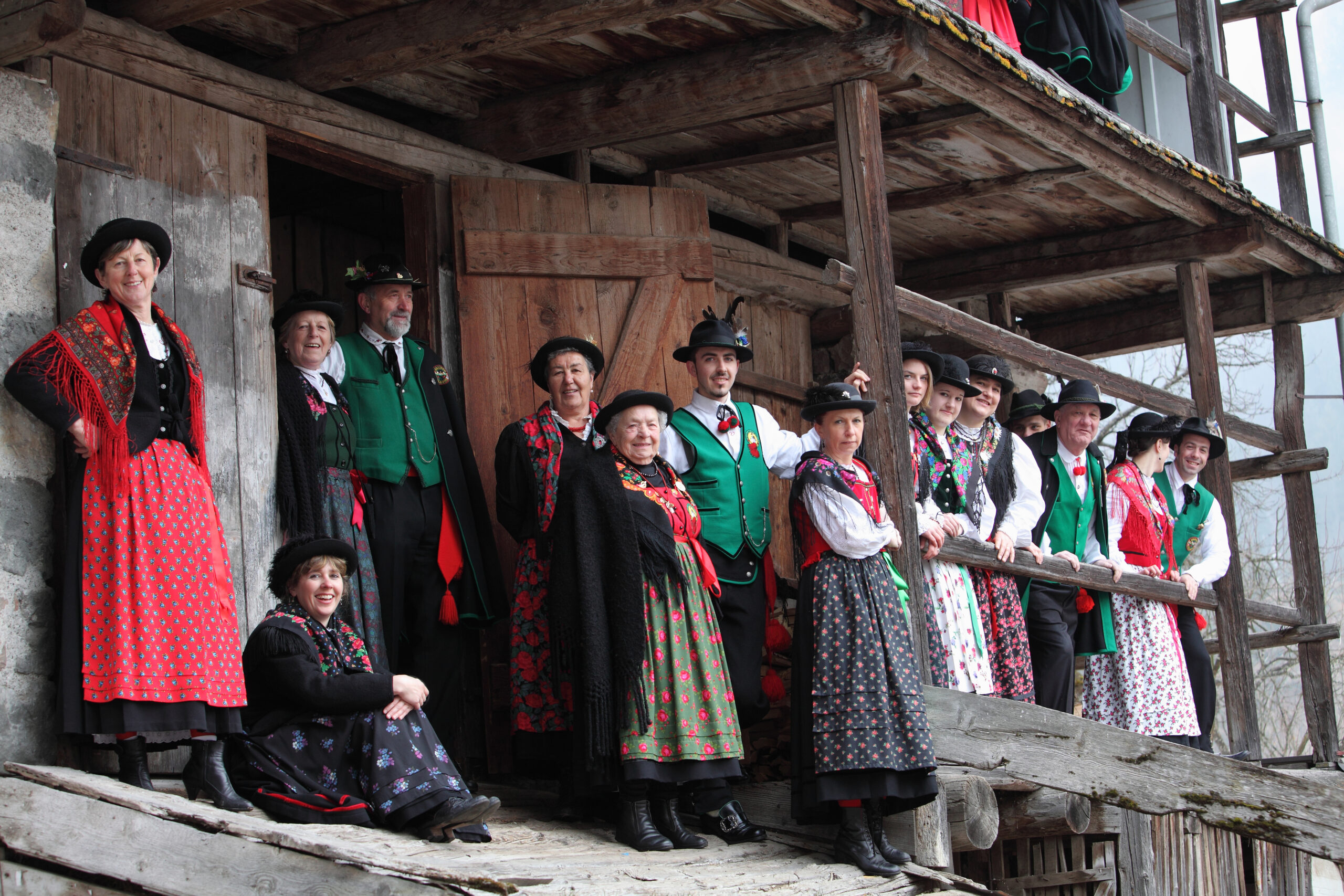
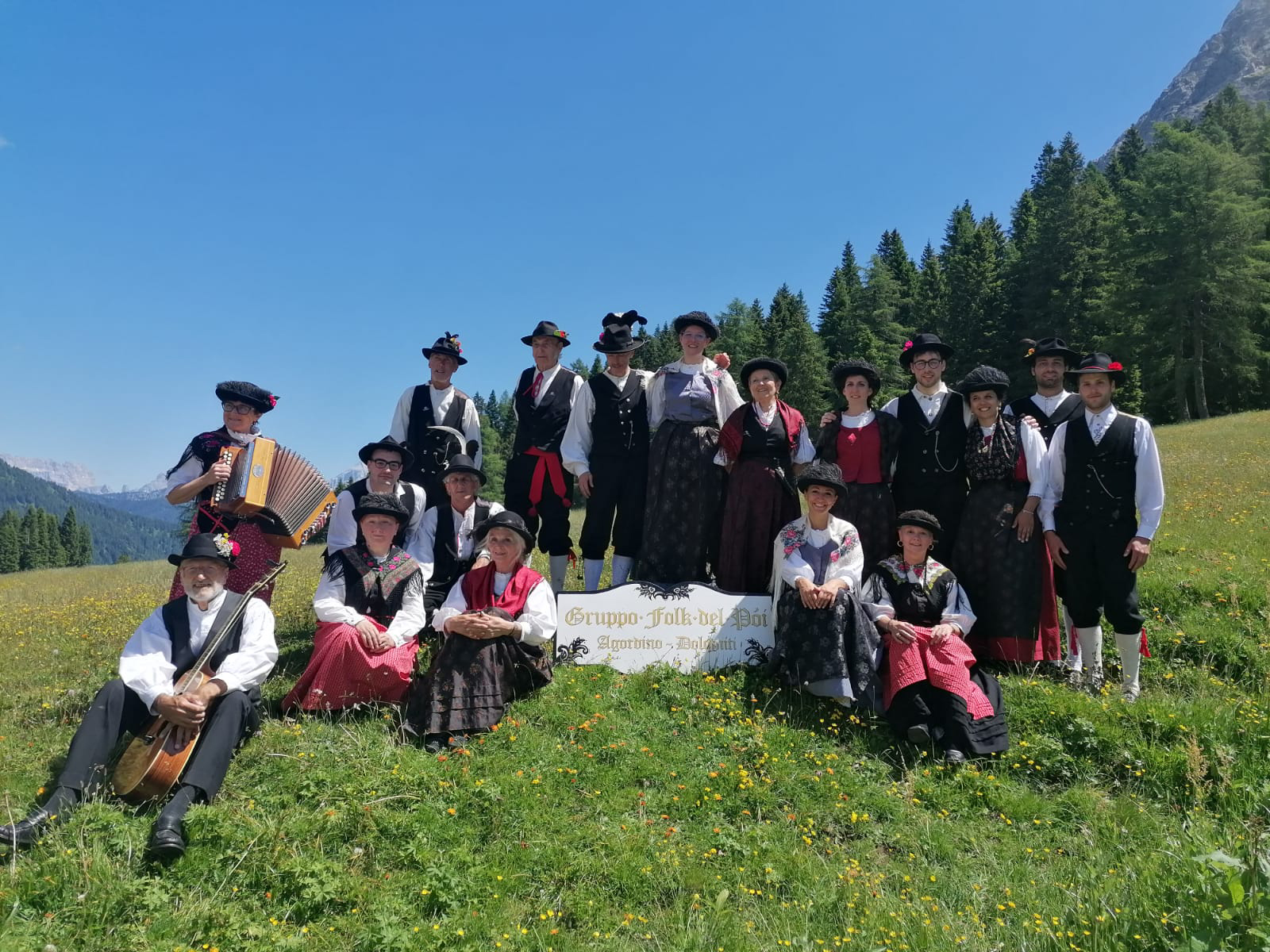
The “Gruppo Folk dei Ladin del Pói che bala” (later “Gruppo Folk del Pói”) was born in 2000 out of an initial dance group formed on the initiative of the Union dei Ladin da Gosalt (Gosaldo).
After a few years the association opened up to the neighbouring villages (Voltago, Rivamonte, Tisèr), that is, to the villages bordering the woods of the area known as Pói, in the Conca Agordina, from which the group takes its name. Later the group would also welcome members from other nearby villages.
The group researches what has survived of the local musical tradition and gives new life to dances and songs that would otherwise be irretrievably lost. In its performances, the Gruppo Folk del Pói tries to remain as faithful as possible to the original dances it has rediscovered, so as not to fall into mere, pointless “tourist folklorism”, and so as to preserve that naïve flavour which only popular culture can express.
Another important aim of the group is to spread as widely as possible the great cultural heritage of local traditional dance and music, both through courses and events open to all and by directly involving the audience during its performances.
Whenever it dances, the group tries to leave in the hearts and souls of those watching a trace of the importance of the roots of a people, the people of the Belluno mountains, who for a long, too long time had to struggle against poverty and deprivation in a life of toil and sacrifice, but who over the years managed to redeem themselves and win their own dignity and identity as a hard-working and loyal people.
The group has to its credit two video collections of its dances, “Me fastu en bal?” (2013) and “Balagordin” (2025), and the publication “Agordino in festa” (2017). The group currently has 20 members.
Since 2023 the Gruppo Folk del Pói has also been incorporated into the Union Ladina Agordin Sotciusa.
Museo Etnografico e del Seggiolaio – Union Ladin da Gosalt
via Roma 1, Gosaldo
The Museo del Seggiolaio was founded in 2003 on the initiative of the Union Ladin da Gosàlt, and in particular at the wish of its then president Mario Bressan, with the aim of preserving the historical and cultural heritage of the Gosaldo area.
The Museum is housed on the first floor of the former town hall at via Roma 1 in Gosaldo, practically on the main square of Don, the municipal seat. It is laid out in three sections:
– The first, as you enter, is devoted to farming in the Gosaldo area, with a display of various tools, from those used for working the land to those for raising livestock and processing milk. There are tools for processing flax, a crop grown very widely, especially in the hamlet of Sant’Andrea “La Vila”, to make linen and clothing for men and women. On display are period costumes of adults and children, galoshes, dalmede of wood and leather and the traditional “scarpet”, slippers made from recycled fabric and embellished with velvet and various decorations.
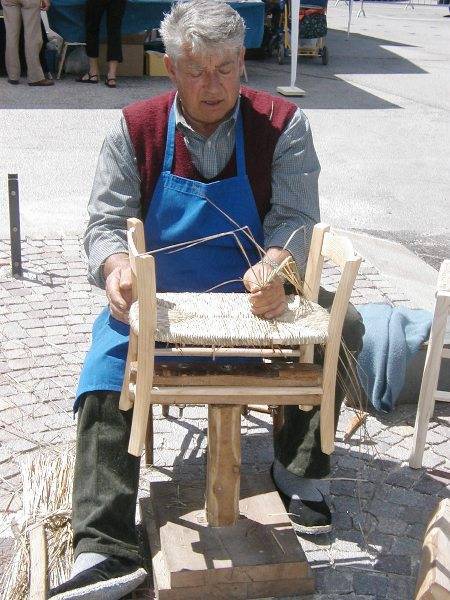
– The second section is entirely devoted to the distinctive work of the “Konže”, the chair-makers. From as early as the 17th century, chair-making was a considerable source of livelihood for families in Gosaldo (and in the other villages of the Poi and Sagron-Mis). In their long wanderings around Italy they travelled most often throughout the Veneto, Emilia-Romagna and Lombardy, but some went as far as the Marche and Tuscany. Later, when work in Italy dwindled, they crossed the borders, mostly to France but also to Switzerland, Germany and Austria.
It was hard work, because it was itinerant and above all done in winter; sleeping in haylofts and eating little were the order of the day. The older master chair-makers took their own children with them, and other children too, some from the age of nine or ten. So as not to be understood by their customers they had invented a jargon, the scabelament del Konža (the chair-maker’s speech), used only in northern Italy, since abroad it was enough to speak Ladin to be sure of not being understood. The Union Ladin da Gosàlt has published a dictionary of about 800 words: the “Scapelament del Konža”, still available at the Museum. Chair-making began to decline after the mid-1960s, with the arrival of industry and building sites in the Agordino; for some time, however, many fellow villagers had already been working in the mines of Belgium and in Swiss factories.
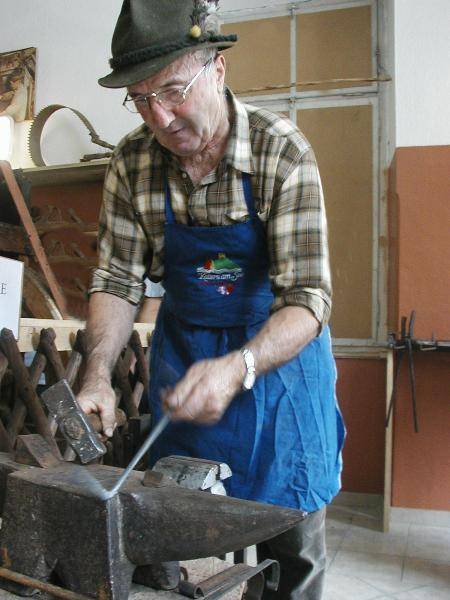
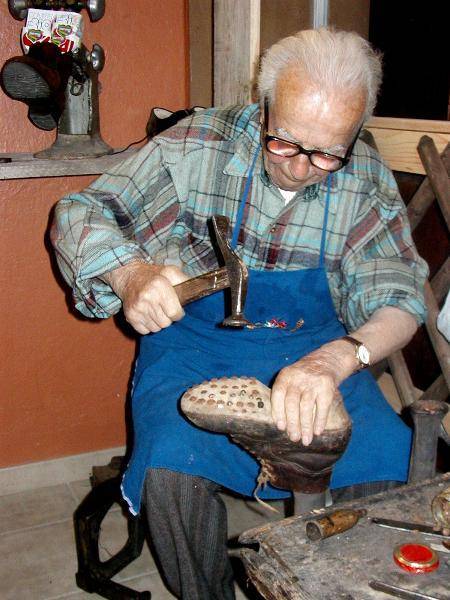
– The third section is devoted to the various secondary trades of the village of Gosaldo. It houses a wooden lathe from 1920, still in working order, built and used by one Marcon Giovanni, known as “Manèra”, from Titele, who had been maimed and disabled in the war. His shoemaker’s tools are also on display, with the sewing machine and the shoe lasts. One part is devoted to the work of blacksmiths and of carpenters, with their tools.
A typical hearth has also been reconstructed, with the implements used for cooking and for processing milk. Every year, according to needs and following new acquisitions, the museum collection is rearranged and expanded, also with the installation of multimedia systems.
In 1996 the Monumento al Seggiolaio by the sculptor Gianni Pezzei was unveiled in the centre of Gosaldo, bearing the dedication “El Konža, Ingegno che fu Arte”, which fully expresses the great contribution this trade has made to the history and economy of Gosaldo.